Your cart
Your cart is empty
Continue shoppingDrawer menu

Last Updated: September 20, 2026
The 5 best storage solutions for necklaces depend on how many pieces you own and whether your priority is tangle prevention, space efficiency, or daily accessibility. A velvet-lined armoire suits large collections, wall-mounted organisers excel for long chains, drawer trays win in small spaces, travel cases protect delicate pieces, and display stands keep everyday favourites visible. This guide from DP Online Syd breaks down each option so you can match storage to your habits, not just your aesthetic.
Storage Solution |
Best For |
Key Feature |
Price Range |
|---|---|---|---|
Velvet-Lined Jewellery Armoire |
Large collections |
Compartmentalised drawers, hanging hooks |
Varies by size |
Wall-Mounted Hanging Organiser |
Tangle-free long chains |
Vertical storage, visible display |
Low to mid |
Stackable Drawer Trays |
Small spaces |
Compartmentalised, space-saving |
Budget-friendly |
Travel-Friendly Necklace Case |
Delicate pieces on the go |
Protective lining, compact |
Low to mid |
Display Stand & Compartmentalised Box |
Accessibility and visibility |
Everyday access, anti-tarnish options |
Varies |
Best for: Collections of 15+ necklaces where visibility and protection both matter.
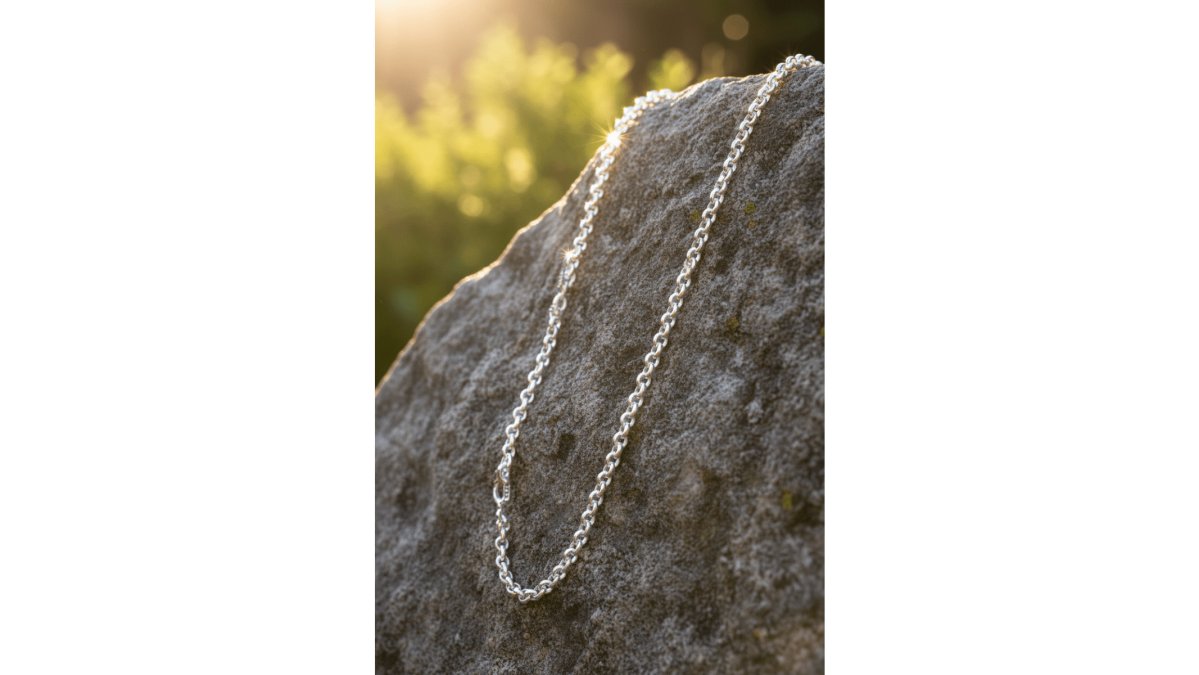
24" 60cm Italian 925 Sterling Silver Belcher Chain
A wall-mounted hanging organiser solves the biggest necklace problem: tangling. Storing chains vertically on individual hooks lets gravity keep them separated, so long pendants and layered chains stay ready to wear.

24" 60cm Italian 925 Sterling Silver Belcher Chain 5 Best Storage Solutions for Necklaces
Stackable drawer trays turn a single drawer into a compartmentalised storage system. Felt or velvet-lined trays with individual slots keep each necklace flat and separated, and you can add layers as your collection grows.
Best for: Small spaces, renters, and growing collections.
A travel-friendly necklace case is the only safe way to move delicate pieces. Look for a compact case with a protective lining, individual snap closures for each chain, and a rigid outer shell.
A display stand combined with a compartmentalised box keeps your most-worn necklaces accessible without sacrificing protection. The stand holds everyday pieces upright for quick selection, while the box stores the rest in a dust-free, velvet-lined interior.
All-in-One Jewellery Polish & →
Cleaning before storage prevents tarnish from setting into the metal, but the safe method depends on what the piece actually is. Sterling silver, silver-plated base metal, and silver with gemstone settings each need a different approach, and the wrong one causes damage no amount of polishing can reverse.
For most sterling silver necklaces without delicate stones, follow these steps:
Tarnish removal dissolves or lifts the silver sulphide film; polishing abrades the metal surface to make it shine. They use different products and carry different risks:
Never use toothpaste, baking soda paste, or harsh abrasives on silver, they scratch the surface, and the scratches trap tarnish faster next time. Avoid chlorine and bleach entirely, and never use a chemical dip on pearls, opals, turquoise, or any glued setting.
Once a piece is clean and completely dry, store it in the enclosure that matches its metal: sealed and sulphur-free for silver, soft and moderate-humidity for pearls and porous stones, and simple and dry for high-karat gold.
Tarnish is a chemical reaction, not dirt. On silver, sulphur compounds in the air react with the metal to form silver sulphide, the brown-to-black film on a chain that has sat unworn for a season. Humidity accelerates that reaction, as does contact with certain other metals and the acids in skin oils and perfume residue. Preventing jewellery tarnish comes down to four controls: material contact, humidity, air exposure, and the metal itself.
Store different metals separately. Silver in direct contact with copper or brass speeds up oxidation on both, because the two metals form a galvanic couple and the less noble one corrodes first. Gold alloys containing copper (common in rose gold and lower-karat yellow gold) can also discolour when pressed against silver for long periods. The rule: one pouch or compartment per metal, never a mixed pile.
Humidity is the biggest accelerant most people ignore. Bathrooms and kitchens are the worst rooms for jewellery storage, steam and cooking vapours push relative humidity well above the level at which silver sulphide forms quickly. Keep storage in a bedroom or hallway where relative humidity stays roughly between 40% and 50%. Above about 60%, tarnish speeds up noticeably; below about 30%, some gemstones and pearls can dry out and crack, so aim for a band, not a desert.
All-in-One Jewellery Polish & →
Practical humidity controls: 5 Best Storage Solutions for Necklaces
Most guides treat "jewellery" as one material. It is not, and storage requirements diverge sharply:
Hanging suits long chains and pendants because gravity keeps links separated and stops tangling, which is why a wall-mounted or armoire hook setup works well for statement pieces. Flat storage in a compartmentalised drawer tray suits shorter, delicate chains and chokers, where hanging can stretch fine links over time. Many collectors use both: hang anything over 50cm, lay shorter pieces flat in a velvet-lined tray with each chain in its own slot.
Sterling silver reacts with sulphur compounds and humidity in the air, so store 925 pieces in a tarnish-resistant pouch or a velvet-lined box with an anti-tarnish strip. Gold is more stable but still benefits from a dust-free, dry environment away from direct sunlight. Keep humidity low, avoid storing silver next to rubber bands or wool, and give chains a quick clean before they go back in storage so skin oils do not trap moisture against the metal.
Use a mild silver cleaner and a soft cloth rather than abrasive polishes, which strip the surface over time. For chains with heavy build-up in the links, a portable ultrasonic cleaner with a 300ml chamber lifts dirt and oils using high-frequency vibration and water alone, no harsh chemicals. Pat dry completely before storage, because trapped moisture is what drives tarnish. The All-in-One Jewellery Polish & Protection Solution ($12.95) sprays on, restores shine and leaves a protective layer without rinsing.
Stackable drawer trays and wall-mounted organisers use vertical and hidden space rather than surface area. A wall organiser with individual hooks holds 20 or more chains in the footprint of a single picture frame, while stackable velvet-lined trays slide into an existing bedside drawer and keep each piece compartmentalised. If you rent and cannot drill, a slim armoire or a hanging organiser that loops over a wardrobe door rail achieves the same tangle-free result.
It depends on chain length and how often you wear each piece. Boxes with compartmentalised trays and protective lining keep shorter chains dust-free and are easy to move, which suits small collections and travel. Wall-mounted organisers keep long chains and pendants visible and tangle-free, so you actually wear them instead of untangling them. A practical split is a box for everyday delicate pieces and a wall organiser for statement chains over 50cm.


 is here! Shop now, pay later in 4 easy installments