Your cart
Your cart is empty
Continue shoppingDrawer menu

Last Updated: September 14, 2026
Crystal jewelry absorbs oils, dust and residue from daily wear, and many wearers also believe it collects negative energy that dulls its energetic vibration. The best way to cleanse crystal jewelry without damage starts with understanding that most damage comes from the cleansing method itself, not the wear.
Water dissolves some minerals. Salt corrodes sterling silver. Direct sunlight fades certain stones.
The distinction between scientific and metaphysical approaches matters here. Physically, you are removing skin oils, sunscreen and dust. Metaphysically, you are clearing absorbed energy. Both goals are valid, but the physical risks are non-negotiable, because a cracked stone or failed adhesive cannot be undone by intention alone.
For delicate gemstones and fragile settings, dry methods beat wet ones every time. Sound, smoke and moonlight clean energetically without touching metal, glue or porous stones.
Sound cleansing uses vibrational frequency to clear a piece without physical contact. A singing bowl or bell placed near the jewelry, not on it, is enough. Hold the piece in your palm a short distance away and let the resonance do the work.
Smoke cleansing, often called smudging, follows the same logic. Pass the piece through sage, palo santo or incense smoke for a minute or two. Keep the flame well away from the metal, and never let ash settle into a setting where it can trap moisture.
Both methods suit porous stones, opals, pearls and anything with an adhesive-set stone. Neither introduces water, salt or heat, so gemstone integrity stays intact.
The honest answer for most crystal jewellery: never. Salt water is one of the most damaging cleansing methods for finished pieces, even though it is popular for loose stones. The reason is not the stone, it is the metal and the glue holding it together.
Salt water is an electrolyte. Once it sits against metal, it accelerates the electrochemical reactions that cause tarnish and corrosion. The effect varies by metal:
Dry salt is not automatically safer. Salt crystals are abrasive and hygroscopic, they pull moisture from the air and hold it against the metal, which is why a salt bowl left in a humid room can corrode a piece just as effectively as a soak (pubmed.ncbi.nlm.nih.gov).
Most fashion and mid-range crystal jewellery uses epoxy or cyanoacrylate adhesive to set stones, especially in bezels, clusters and cheaper prong settings. These adhesives are not waterproof (pubmed.ncbi.nlm.nih.gov). Warm water softens them within minutes; salt water and cleaning solutions break them down faster. The stone often does not fall out immediately, it loosens, sits slightly proud of the setting, and drops out days or weeks later with no warning. By then the stone is usually lost.
If you cannot confirm a piece is prong-set or channel-set with no glue, treat it as adhesive-set and keep it dry.
Some stones tolerate brief submersion. Others dissolve, soften or lose their polish. Check the Mohs hardness scale and water solubility before any wet cleansing.
Stone |
Water-Safe? |
Risk |
|---|---|---|
Quartz, amethyst, clear crystal |
Yes |
Low, but check the setting |
Selenite, halite, malachite |
No |
Dissolves or softens |
Opal, pearl, turquoise |
No |
Porous, absorbs water and can cloud |
Moonstone, labradorite |
Brief only |
Can cloud over time |
Pyrite, marcasite |
No |
Rusts and stains the setting |
Keep it to loose, water-safe stones with no metal and no adhesive. Limit submersion to a few hours at most, rinse with distilled water rather than tap, and dry immediately with a microfibre cloth. For any finished jewellery, choose a dry alternative instead.
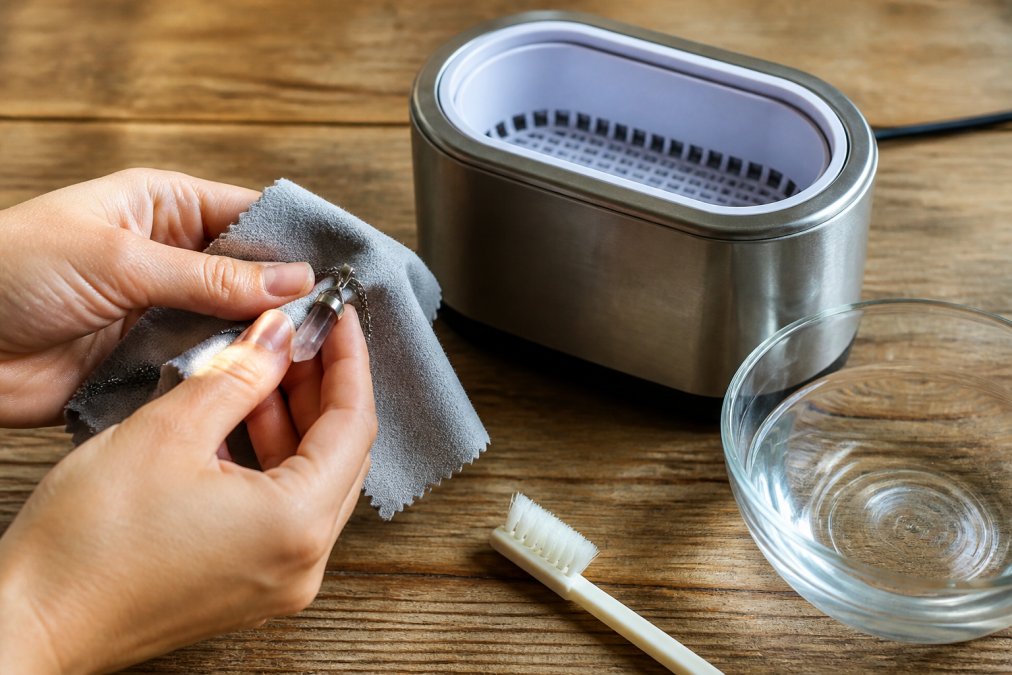
The best tools for cleansing crystal jewellery are the ones that clean without abrasion. A soft microfibre cloth, a gentle brush and a dedicated cleaner cover almost every situation.
For physical cleaning, DP Online Syd stocks a multi-functional portable ultrasonic cleaner that uses high-frequency vibration to lift dirt and oils from crevices without harsh chemicals. Pair it with the All-in-One Jewellery Polish & Protection Solution to remove tarnish and restore brightness on silver, gold and platinum.

A common mistake is using paper towel or tissue. Both scratch polished metal and leave fibres behind in settings. Microfibre only.
Cleansing clears; charging restores. But before you charge anything, it helps to separate two jobs that most guides blur together.
Cleaning is physical. It removes skin oils, sunscreen, soap residue, dust and tarnish from the stone and the metal. It is done with a microfibre cloth, a soft brush, or an ultrasonic cleaner on the right pieces.
Cleansing is energetic. It is the practice of clearing absorbed energy so the stone feels reset. It is done with sound, smoke, moonlight or intention.
You can cleanse without cleaning, and you can clean without cleansing. Doing both, in that order, clean first, then cleanse, is what keeps a piece looking new and feeling reset. Skipping the physical clean means you are layering intention on top of a film of sunscreen, which no practitioner would recommend.
After cleansing, charging restores the stone's metaphysical properties. The methods below are ranked by how safe they are for metal and adhesive settings:
Most wearers find a simple rhythm easier to keep than an elaborate ritual:
This schedule keeps the physical and energetic sides in step without turning jewellery care into a chore.
Travel is where most jewelry damage happens, because routines break and hotel bathrooms invite shortcuts. Pack a small microfibre pouch and a selenite stick instead of liquid cleaners, which leak and rarely survive airport screening.
Sound cleansing travels well if you use a small bell or a tuning fork. A clearing spray in a travel-sized bottle works for a quick refresh, provided you mist the pouch rather than the jewelry itself. Never leave pieces loose in a bag where metal can scratch metal.
For longer trips, a soft roll or individual pouches keep chains from tangling and settings from catching on zips. It takes seconds to pack properly and saves a repair later.
Crystal jewelry rewards gentle handling, and the methods that protect metal, glue and stone are the same ones that clear energy effectively. Dry cleansing, moonlight charging and the right tools will keep every piece looking new for years.
DP Online Syd offers ethically sourced crystal and sacred geometry pieces backed by a lifetime warranty, free shipping on orders over $100, and beautifully packaged delivery. Our collection includes hallmarked gold and sterling silver alongside crystal designs, all supported by our jewellery care range.
Get started with DP Online Syd and keep your crystals cleansed, charged and undamaged.
Removing negative energy usually means resetting the stone's energetic vibration. Sound cleansing with a singing bowl or bell, or smoke cleansing with sustainably sourced sage or palo santo, works well for delicate crystal jewelry because it avoids water and salt. Hold the piece in the smoke or near the sound for 30 to 60 seconds, then set a clear intention. For pieces with glued settings, these methods are safer than submersion.
Avoid prolonged salt water soaks, harsh chemicals, and direct sunlight for extended periods. Salt water can corrode metal findings and damage porous stones, while sunlight can fade amethyst, rose quartz, and citrine. Also skip ultrasonic cleaners on pieces with adhesive-set stones or soft gemstones below 7 on the Mohs hardness scale. Always check the setting before choosing a method.
No. Water-soluble stones like selenite, halite, and malachite should never be submerged. Porous stones such as turquoise, opal, and moonstone can absorb water and weaken over time. For water-safe crystals like clear quartz or amethyst, a quick rinse with filtered water is fine, but dry immediately with a soft cloth. When in doubt, use sound or smoke cleansing instead.
For water-safe, non-porous crystals, a salt water soak of 1 to 2 hours is enough to clear energetic residue. Never exceed 24 hours, and avoid salt water entirely for pieces with sterling silver, gold plating, or glued settings because salt accelerates tarnish and oxidation. After soaking, rinse with fresh water and pat dry with a lint-free cloth.


 is here! Shop now, pay later in 4 easy installments