Your cart
Your cart is empty
Continue shoppingDrawer menu

Last Updated: September 7, 2026
Gold rings collect daily grime, skin oils, and soap residue that dull their natural luster. This guide from DP Online Syd walks you through a gentle, effective method using supplies you already own.
Harsh chemicals or abrasive pastes cause more harm than good; toothpaste or baking soda can scratch the metal. The safest approach is mild dish soap, warm water, and a soft brush.
Below, we'll show you exactly how to clean gold rings step by step, including gemstone settings, common mistakes, and when to call a professional.
Gold is a soft, malleable metal by nature. Pure 24-karat gold is too soft for everyday rings, so it is alloyed with other metals to create 9-karat, 14-karat, or 18-karat gold. These alloys are more durable but still prone to scratching and can react to harsh chemicals.
The gold karat of your ring determines how delicate it is and how you should clean it. A one-size-fits-all approach can be damaging.
Lower karat gold (9k or 10k) contains a higher proportion of alloyed metals like copper, silver, and zinc. This makes the ring harder and more scratch-resistant, but these base metals are reactive and more likely to tarnish when exposed to moisture, sulphur, or acidic skin oils.
Cleaning implication: You can be slightly more vigorous with a soft brush on 9k gold, but you must be diligent about drying, as trapped moisture accelerates tarnish. A dark or greenish film is oxidised copper, not dirt; a standard soapy soak will not remove it. Use a jeweller's polishing cloth or seek a professional clean.
14-karat gold (58.3% pure gold) is the most common choice for everyday rings, balancing durability and colour. It is less prone to tarnish than 9k but still contains enough alloyed metal to be affected by harsh chemicals.
Cleaning implication: The standard warm soapy water method is ideal. Avoid acidic cleaners like vinegar or lemon juice, as these can leach alloying metals from the surface, leaving the ring duller or more porous over time.
Higher karat gold (18k is 75% pure, 22k is 91.7% pure) has a richer colour and is more valuable per gram, but it is significantly softer. It scratches easily, and prongs holding gemstones can bend or wear down faster than on lower karat settings.
Cleaning implication: Aggressive scrubbing is your enemy. Do not use a toothbrush on 18k or 22k gold, even a soft one, as the bristles can create micro-scratches visible under light. Instead, use a cotton ball or a very soft microfibre cloth dipped in the soapy solution to gently wipe the surface. Never use ultrasonic cleaners on 22k gold, as the vibrations can dent the soft metal.
Daily wear exposes your ring to hand cream, perfume, and cleaning products, leaving a film that traps dirt. Understanding your ring's karat is the first step to choosing a cleaning method that removes that film without damaging the metal.
Before you start, gather the right supplies; using proper tools is just as important as the cleaning method.
You will need a small bowl, warm water, mild dish soap, a soft-bristled toothbrush, and a lint-free cloth. A microfiber cloth works well for polishing. For stubborn buildup, a dedicated jewellery polishing cloth can restore shine without scratching.
Choosing the correct supplies prevents accidental damage to your ring.
| Supply | Safe Option | Avoid |
|---|---|---|
| Soap | Mild dish soap | Harsh detergents, ammonia, bleach |
| Brush | Soft-bristled toothbrush | Hard-bristled brushes, abrasive sponges |
| Cloth | Microfibre or lint-free cloth | Paper towels, tissues, rough fabrics |
| Solution | Warm soapy water | Vinegar, baking soda paste, toothpaste |
Avoid abrasive materials and harsh chemicals at all costs. Vinegar and baking soda are popular internet hacks, but they are too aggressive for gold. Ammonia and bleach can damage both the metal and any gemstones. Stick to the mild soapy solution for routine cleaning.
The entire process takes about ten minutes and requires no special equipment. Follow these steps carefully to clean gold rings without risk of damage.
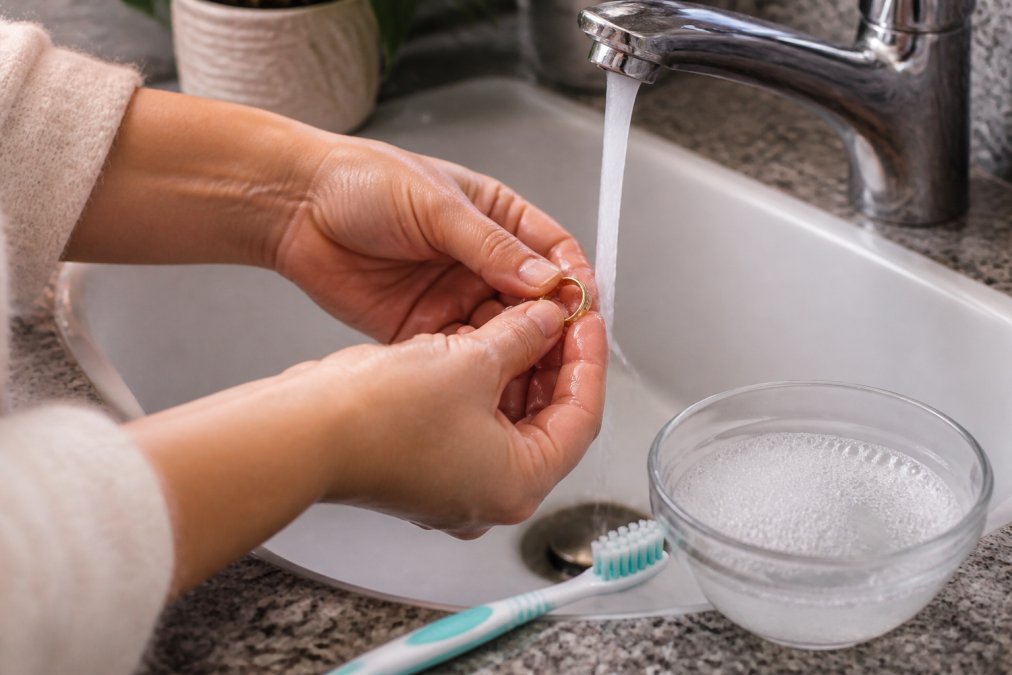
Fill a small bowl with warm water and add a few drops of mild dish soap, swirling gently. The water should be warm, not hot, as extreme temperatures can stress the metal or loosen gemstone settings.
Place your ring in the bowl and let it soak for 10 to 15 minutes. This loosens dirt, oils, and residue so you do not have to scrub aggressively. For rings worn daily, a longer soak makes cleaning easier and safer.
After soaking, remove the ring and hold it over the bowl. Use a soft-bristled toothbrush to gently scrub the surface, focusing on crevices and settings where grime collects. Use small circular motions with light pressure.
Pay extra attention to the underside of the ring and the area around any stones. These spots trap the most residue. If your ring has intricate detailing, angle the brush to reach grooves without forcing the bristles.
Rinse the ring thoroughly under warm running water to remove all soap residue. Leftover soap can dull the finish. For rings with loose stones, place a stopper in the sink or rinse over a bowl to prevent losing a gem down the drain.
Pat the ring dry with a lint-free cloth, then use a polishing cloth to buff it to a shine. Ensure the ring is completely dry before wearing or storing it, as trapped moisture can cause tarnish in lower karat gold.
Gemstone settings require extra caution. Not all stones tolerate the same cleaning methods, and some are quite fragile.

Soft stones like opals, pearls, and emeralds should never be soaked in soapy water. These porous stones absorb liquids and can be damaged by even mild solutions. For these rings, use a damp microfibre cloth to gently wipe the stone and metal, then buff dry immediately.
Harder stones like diamonds, sapphires, and rubies can handle the soapy soak method described above. However, scrub gently around the prongs to avoid loosening the setting. If your ring contains multiple stone types, clean it as if it contains the most delicate stone.
Many well-intentioned cleaning attempts cause damage. Beyond the usual warnings about toothpaste and baking soda, there are two specific areas where home users frequently cause irreversible harm: ultrasonic cleaners and chemical 'dips'.
Home ultrasonic cleaners are popular, but they are not a universal safe option. They work by sending high-frequency sound waves through a liquid, creating microscopic bubbles that implode and blast dirt off surfaces. This is effective, but the vibration is aggressive.
Stones that are safe: Diamonds, sapphires, and rubies are hard and stable. They can generally withstand ultrasonic cleaning if they have no major internal fractures. Plain gold rings (no stones) are also safe, provided the gold is 10k or 14k.
Stones that are at risk: The Jewellers Association of Australia guidance on ultrasonic cleaner safety advises against using these devices on rings with soft or treated gemstones. Specifically, you should never put these in an ultrasonic cleaner:
Settings at risk: Even if the stone is hard, the setting may not be. If your ring has worn prongs or a loose stone, the ultrasonic cleaner will likely knock the stone out entirely. If unsure about your setting's integrity, skip the ultrasonic cleaner and use the manual soak method.
Many commercial jewellery cleaners come in the form of 'dips' where you submerge the ring for a few seconds. These often contain ammonia or thiourea. While effective at removing tarnish quickly, they are dangerous for certain pieces.
A common pattern is that users rely on these dips for convenience, but they are a 'nuclear option' that should be reserved for plain yellow gold pieces with no stones, and even then, used sparingly.
Skipping the rinse step leaves soap residue that attracts more dirt, so always rinse thoroughly and dry completely. Wearing the ring while applying lotions or perfumes accelerates buildup and dullness, and wearing it while using abrasive household cleaners can pit the metal surface.
Home cleaning handles routine maintenance, but professional services address issues you cannot fix yourself, protecting your ring long term.
Professional jewellery cleaning uses ultrasonic and steam equipment to remove deep-set grime from crevices. More importantly, a professional inspection checks for loose prongs, worn settings, and metal fatigue, issues that lead to lost stones if left unaddressed.
| Cleaning Method | Best For | Frequency |
|---|---|---|
| Home soapy soak | Routine grime and dullness | Every 2-4 weeks |
| Polishing cloth | Light surface oils | Weekly |
| Professional clean | Deep cleaning and inspection | Every 6-12 months |
A professional inspection is particularly important for rings worn daily, such as engagement rings. Prongs wear down over time and may need re-tipping to secure the stone. A jeweller can also check for scratches that require re-polishing or rhodium plating for white gold.
The frequency depends on how often you wear the ring and what you expose it to. A ring worn daily through hand washing, cooking, and outdoor activities needs more frequent cleaning than one worn occasionally.
For everyday rings, a gentle clean every two to four weeks keeps them looking bright. A quick wipe with a polishing cloth each week removes surface oils before they build up. For special occasion pieces worn a few times a year, clean them after each wear and store them properly.
Signs your ring needs cleaning include visible dullness, a film on the surface, or skin irritation where the ring sits. If your ring loses its luster despite regular cleaning, it may need professional attention.
How you store your gold ring between wears affects how often it needs cleaning. Proper storage prevents scratches, tarnish, and unnecessary wear.
Store each ring separately in a soft pouch or a jewellery box with individual compartments. Rings rubbing against each other cause scratches, especially if one contains harder stones like diamonds. The Australian Government guidance on caring for precious metal items emphasises that separating jewellery pieces is the simplest way to prevent surface damage.
Remove your ring before activities that expose it to chemicals or impact, including swimming, cleaning, gardening, and heavy lifting. Develop a habit of placing your ring in the same spot each time so you do not misplace it.
For extra protection between cleanings, consider using a jewellery care product. DP Online Syd offers a 5 Pack DP Online Effervescent Tablets Jewellery cleaner that dissolves dullness and oxidation in minutes, ideal for a monthly refresh. Their Quality Microfibre Suede Cleaning cloths are perfect for weekly touch-ups without scratching delicate metal or gemstone settings.


Tarnish occurs when gold alloys react with air and moisture. While pure gold does not tarnish, the metals mixed into lower karat gold can. Storing rings in a dry, airtight container slows this process, as does keeping silica gel packets in your jewellery box.
Caring for your gold ring does not require expensive products or professional services for every clean. A simple soapy soak every few weeks, gentle scrubbing with a soft brush, and proper storage keep your ring looking its best. When you need a deeper clean or suspect a loose setting, professional inspection is worth the cost to protect your piece.
At DP Online Syd, we understand that your jewellery should last a lifetime. Our range of jewellery care products, including polishing solutions, microfibre cloths, and effervescent tablets, supports your home maintenance routine with quality tools. All our pieces come with a lifetime warranty, reflecting our confidence in their durability. Get started with DP Online Syd and keep your gold rings shining for years to come.
To restore shine, use a bowl of warm water with a few drops of mild dish soap. Soak your gold ring for 10-15 minutes, then gently scrub it with a soft-bristled toothbrush to lift dirt from crevices. Rinse thoroughly under warm water and pat dry with a lint-free cloth. For stubborn dullness, a professional polishing cloth designed for gold will help bring back the luster without scratching the metal.
No, avoid toothpaste when cleaning gold rings. Toothpaste is abrasive and can scratch softer gold alloys, especially 9ct or 18ct gold. It can also dull the finish over time. Stick to mild dish soap and warm water, which is safe and effective for removing everyday buildup. If you need a deeper clean, use a dedicated jewellery cleaning solution formulated for gold.
Never use harsh chemicals like chlorine bleach or ammonia on gold rings, as they can damage the metal and weaken prongs holding gemstones. Avoid abrasive materials such as scouring pads, baking soda paste, or toothpaste. These can scratch the surface. Also, keep your ring away from ultrasonic cleaners if it has soft gemstones like opals or pearls, as the vibrations can cause damage.
For everyday rings, a gentle clean every two to four weeks keeps them looking their best. Rings worn less frequently may only need cleaning every couple of months. A quick wipe with a soft polishing cloth after each wear removes oils and prevents buildup. If your ring loses its shine or feels grimy, it is time for a proper clean with soapy water.


 is here! Shop now, pay later in 4 easy installments